



Imagine stepping into a virtual café in Paris, sipping a digital espresso while chatting with a native French speaker. Welcome to the future of language learning, where VR technology turns the daunting task of mastering a new language into an immersive adventure. Gone are the days of boring textbooks and repetitive drills. With VR, learners can dive headfirst into real-world scenarios, making mistakes and picking up phrases in the most engaging way possible.
Overview of VR Language Learning
VR language learning leverages immersive environments to enhance language acquisition. This method allows learners to interact within simulated settings, such as bustling cafés or scenic marketplaces. Engaging with native speakers in these environments simulates real-life conversations, fostering confidence.
Educators design VR lessons that cover various topics and language skills. Lessons often include vocabulary drills, grammar practices, and cultural nuances. Incorporating visual and auditory stimuli aids memory retention and comprehension.
Studies indicate that VR can improve language proficiency significantly. Research shows users experience faster language learning due to the real-world context provided by VR. Usage of this technology encourages learners to experiment without the fear of making mistakes, promoting active engagement.
Platforms offering VR language learning vary in content and approach. Some focus on complete immersion, while others emphasize structured lessons. Diverse experiences cater to learners at different skill levels.
In addition, social interaction plays a crucial role in language development. Virtual classrooms enable collaboration through group activities, dialogues, and discussions. When learners participate in these shared experiences, they develop stronger communication skills.
Peer feedback emerges as an essential component of the learning process. Engaging with fellow learners supports progression and provides varied perspectives. This social aspect of VR helps build a community and encourages accountability in language practice.
Through innovative VR tools, students gain practical skills that transcend traditional learning methods. Enhanced vocabulary, improved pronunciation, and cultural understanding stem from these engaging virtual experiences. VR language learning transforms how individuals approach language mastery, merging technology with education effectively.
Benefits of VR Language Learning
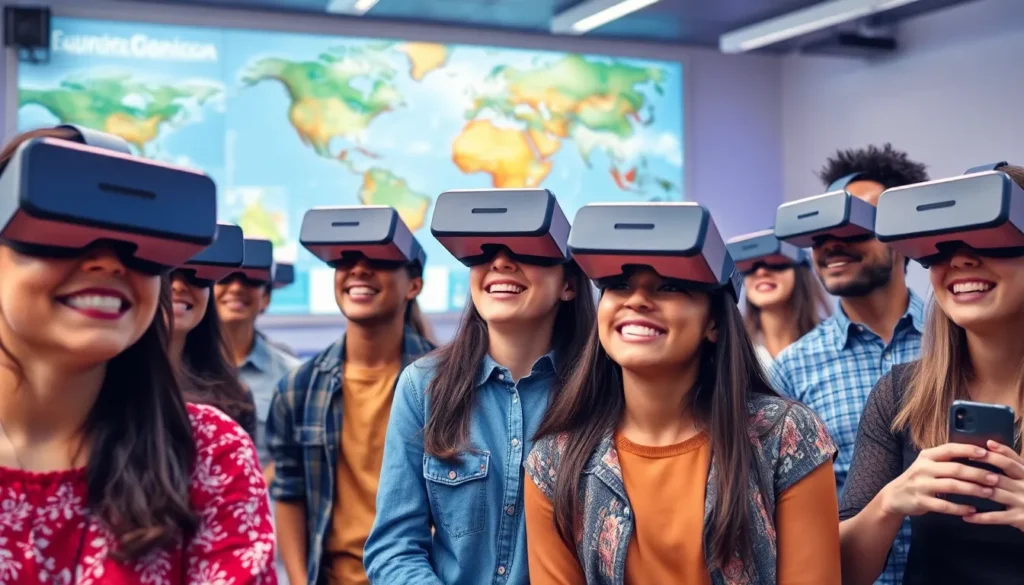
VR language learning offers unique advantages, transforming how individuals acquire new languages through immersive experiences and increased engagement.
Immersive Experience
Users engage in lifelike scenarios, which promotes natural interactions. In virtual environments, learners practice real-life conversations that mirror authentic experiences. Accessing richly designed settings boosts cultural immersion. Simulations let users navigate diverse situations, from ordering coffee to asking for directions. Engaging with virtual native speakers fosters confidence in language use. This level of immersion leads to faster language acquisition and deeper comprehension.
Enhanced Engagement
Interactive elements capture learners’ attention, making studying enjoyable. Participants remain involved through gamified learning activities that encourage exploration. Collaboration occurs within virtual classrooms, where learners bond through group exercises. Active participation enhances communication skills and fosters community building. Engaging content maintains motivation, leading to better retention of vocabulary and grammar. Using VR tools, students experience a transformative approach to learning that traditional methods fail to offer.
Popular VR Language Learning Platforms
Various platforms offer innovative approaches to VR language learning. Each platform provides unique tools and experiences for users.
Platform Comparison
Different platforms excel in diverse areas. ImmerseMe focuses on real-world scenarios, providing learners opportunities to engage in social interactions. Engage emphasizes customizable classrooms, allowing educators to tailor lessons to specific needs. Virtaal integrates gaming elements, making learning more dynamic and enjoyable. Comparatively, vTime XR offers social interactions in a widespread virtual world, enhancing peer collaboration. These differences enable learners to select platforms that align with individual learning preferences and objectives.
Unique Features
Specific features set these platforms apart. ImmerseMe provides guided tours in various settings, enriching vocabulary through contextual learning. Engage allows for interactive presentations, making information retention easier. Virtaal uses gamification to increase motivation, turning language learning into an enjoyable experience. Other platforms like vTime XR include social networking options where users converse naturally, closely resembling real-life interactions. These unique aspects contribute significantly to enhancing the overall language learning experience in VR environments.
Challenges in VR Language Learning
VR language learning presents several challenges that can hinder the experience.
Technological Barriers
Technological barriers can affect the effectiveness of VR language learning. Not all users have access to the latest VR devices, which limits participation. Some platforms require high-speed internet to function smoothly, creating additional challenges for individuals with slower connections. Compatibility issues may arise, as certain VR applications may not work on all devices. Additionally, learning curves exist; users who are unfamiliar with VR technology may struggle to navigate the virtual environments. These factors can directly impact the overall experience and effectiveness of VR language learning.
Accessibility Issues
Accessibility issues play a significant role in the adoption of VR language learning. Individuals with physical disabilities may find it difficult to engage with certain VR applications. Many VR headsets are not designed for extended use, which can lead to discomfort or fatigue. Furthermore, users with visual or auditory impairments might face challenges when it comes to fully participating in immersive experiences. Language learners from diverse backgrounds may also encounter content that is not adequately localized, limiting its relevance. Ensuring that VR language platforms are inclusive remains vital for maximizing engagement across all demographics.
Future of VR Language Learning
The future of VR language learning looks promising with ongoing advancements. Users increasingly experience enhanced engagement through innovative technology.
Trends and Innovations
Emerging trends in VR language learning focus on personalization and increased interactivity. Learners benefit from adaptive learning paths that tailor content to individual progress. New developments in artificial intelligence allow for real-time feedback, helping students refine their skills. Moreover, gamification continues to captivate users by making lessons enjoyable. Platforms are integrating social features that facilitate collaboration among learners, further enhancing language acquisition. Additionally, virtual reality is being combined with augmented reality, creating hybrid experiences that blend real-world and virtual interactions.
Predictions for the Industry
Predictions for the VR language learning industry suggest significant growth in market demand. Analysts project a compound annual growth rate of over 20% through the next five years. Increased incorporation of VR in educational institutions will drive this trend, as educators seek innovative teaching methods. Engagement with content will likely amplify, leading to improved retention rates among learners. Furthermore, the push for accessibility will result in more inclusive VR tools catering to diverse demographics. Companies may invest in developing localized content, ensuring a richer experience for multilingual audiences.
VR language learning represents a revolutionary shift in how individuals acquire new languages. By immersing learners in realistic environments and facilitating genuine interactions, it cultivates confidence and enhances retention. The blend of gamification and social collaboration fosters a supportive community that motivates continuous improvement.
As technology evolves, the potential for personalized experiences grows. With advancements in AI and adaptive learning paths, the future promises even greater engagement and effectiveness. Despite existing challenges, the commitment to inclusivity and accessibility will pave the way for broader participation. VR language learning is not just a trend; it’s shaping the future of education and opening doors to new cultural experiences.