


Imagine sipping a café con leche in a bustling Spanish plaza, effortlessly chatting with locals about the latest fútbol match. Learning Spanish isn’t just about mastering a language; it’s about unlocking a vibrant culture filled with passion, music, and delicious food. With over 460 million native speakers, Spanish opens doors to new friendships, travel adventures, and career opportunities.
Benefits of Learning the Spanish Language
Learning Spanish enhances communication and access to diverse cultures, enriching both personal and professional experiences. This vibrant language offers various cognitive and cultural advantages.
Cognitive Advantages
Acquiring a new language like Spanish strengthens cognitive flexibility, improving problem-solving skills. Individuals engaging with Spanish often see enhanced memory retention, fostering greater mental capacity. Research highlights that multilingual people face fewer cognitive declines, promoting brain health. Additionally, learning Spanish can boost multitasking abilities, allowing for more efficient task management. Finally, exposure to different linguistic structures encourages creative thinking, providing fresh perspectives.
Cultural Insights
Knowing Spanish opens doors to a rich cultural tapestry, filled with art, music, and cuisine. Engaging in Spanish-speaking cultures grants deeper understanding of traditions and customs. Celebrating Spanish festivals, such as Día de los Muertos and La Tomatina, creates unique social experiences. Furthermore, familiarity with Spanish literature enriches appreciation for renowned authors like Gabriel García Márquez and Pablo Neruda. Engaging with Spanish media fosters connections through films, music, and dance, creating bonds with speakers around the world.
Challenges in Learning the Spanish Language
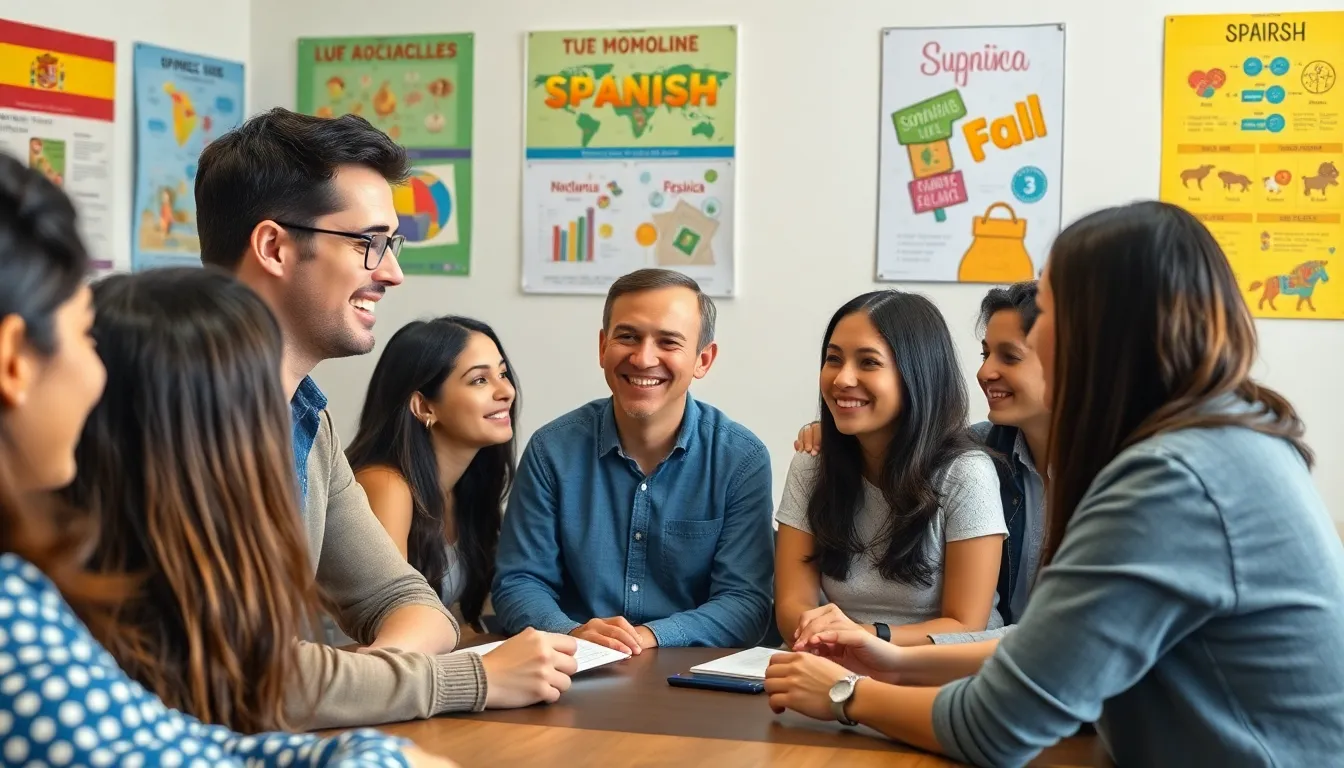
Learning Spanish presents several challenges that learners encounter along their journey. Various obstacles may arise, impacting fluency and comprehension.
Common Obstacles
Pronunciation issues complicate communication. Distinguishing between sounds such as “b” and “v” can be challenging. Grammar rules, including verb conjugations, pose difficulties as well. Navigating gendered nouns adds complexity to sentence structure. Additionally, colloquial expressions and regional dialects may confuse learners, as variations exist across different Spanish-speaking countries.
Strategies to Overcome Challenges
Utilizing language exchange partners enhances learning effectiveness. Practicing with native speakers fosters real-time conversation skills. Interactive apps and online courses offer engaging methods to grasp grammar and vocabulary. Immersive experiences, such as watching Spanish films or listening to music, improve comprehension while making learning enjoyable. Consistent practice remains essential; dedicating time daily solidifies knowledge and builds confidence.
Effective Methods for Learning the Spanish Language
Effective methods greatly enhance the Spanish language learning experience. Incorporating immersive experiences and utilizing online resources contribute significantly to skill development.
Immersive Experiences
Engaging with Spanish language media creates a vibrant learning environment. Watching Spanish films aids listening skills, while also exposing learners to cultural contexts and colloquial language. Listening to Spanish music reinforces vocabulary retention and introduces various dialects. Participating in native-speaking communities, either locally or online, fosters practical conversation practice. Traveling to Spanish-speaking countries immerses learners fully in language use and cultural practices. Each of these experiences deepens comprehension and builds confidence in communication.
Online Resources and Apps
Utilizing online resources and applications simplifies accessing language learning tools. Language exchange platforms connect learners with native speakers for real-time practice. Apps such as Duolingo and Babbel offer structured lessons catering to different proficiency levels. Furthermore, online courses from accredited institutions provide comprehensive curricula. Utilizing YouTube channels dedicated to Spanish language education enhances visual and auditory learning methods. Regularly engaging with these resources allows for flexible study routines and consistent progress in language acquisition.
Tips for Practicing the Spanish Language
Practicing Spanish requires engaging methods to enhance skills and build confidence. Interactive approaches yield better results, enabling learners to immerse themselves in the language.
Conversation Practice
Engaging in conversation with native speakers significantly improves language skills. Seeking language exchange partners offers real dialogue opportunities. Using platforms like Tandem or HelloTalk connects learners with conversationalists worldwide. Group meetups in local communities foster a supportive environment for practice. Participating in online discussions or forums further cultivates conversational fluency. Practicing regularly with diverse topics helps build vocabulary and comprehension. Feedback from peers allows individuals to identify areas for improvement.
Writing and Reading Exercises
Developing writing skills calls for frequent practice in various contexts. Keeping a journal in Spanish helps reinforce grammatical structures and vocabulary usage. Utilizing online resources, such as Spanish-language blogs or news sites, offers valuable reading practice. Reading diverse materials, from novels to articles, exposes learners to different writing styles. Incorporating writing prompts stimulates creativity and challenges learners to express thoughts fully. Participating in online writing courses enhances skills with structured feedback. Combining reading and writing exercises supports deeper understanding and retention of the language.
Embracing the Spanish language opens a world of opportunities and experiences. It enriches personal and professional lives while fostering connections with diverse cultures. The journey may present challenges but with dedication and the right strategies, anyone can overcome them.
Engaging with native speakers and utilizing immersive resources makes learning enjoyable and effective. By committing to consistent practice and exploring the vibrant culture behind the language, learners will not only gain linguistic skills but also a deeper appreciation for the rich tapestry of Spanish-speaking communities. This adventure in learning is sure to be rewarding and transformative.