


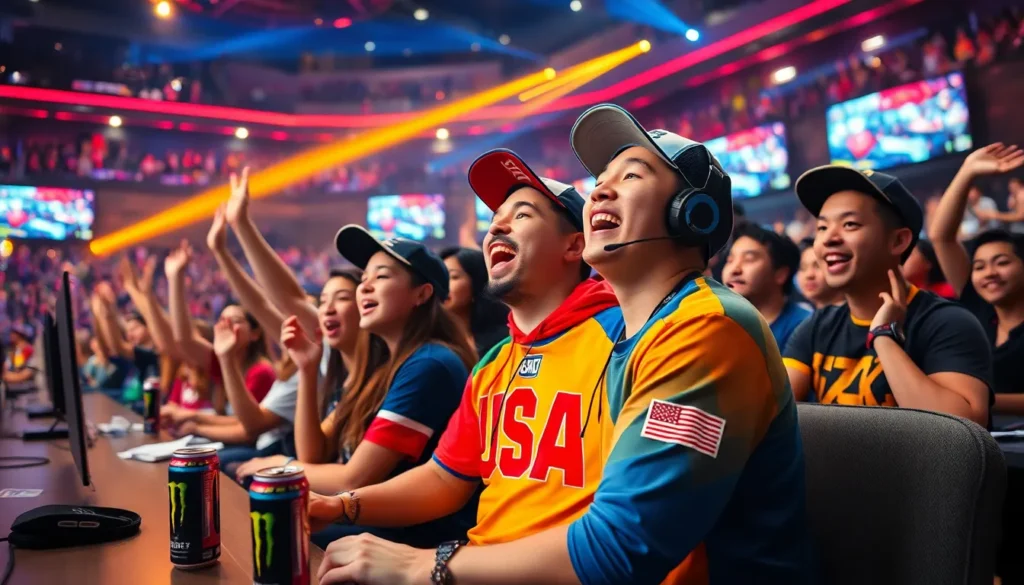
Esports tournaments aren’t just events; they’re epic showdowns where strategy meets adrenaline, and fans become part of the action. Picture this: gamers battling it out for glory, while spectators cheer from the sidelines, fueled by energy drinks and a passion for pixels. If you think watching your favorite team is exciting, wait until you dive into the world of tournament insights!
Overview of Esports Tournaments
Esports tournaments represent a dynamic and rapidly growing segment of the gaming industry. Players from around the globe participate in competitions across various titles, such as League of Legends, Dota 2, and Counter-Strike: Global Offensive. Various formats exist for these tournaments, including single-elimination, double-elimination, and round-robin formats, each offering unique challenges.
Fans play a crucial role in these events, often filling arenas to capacity. Their enthusiasm translates into vibrant atmospheres, enhancing the competitive spirit. Various factors contribute to the popularity of esports, including high-stakes prize pools. Prize money can reach millions of dollars, attracting elite gamers who possess exceptional skills.
Organizers utilize platforms like Twitch and YouTube for live streaming, allowing audiences to engage with their favorite gamers in real time. Analysts provide in-depth coverage, enhancing viewer experience with expert commentary and insights. Teams receive significant sponsorships, leading to lucrative partnerships and opportunities for growth.
Event organizing entails a complex array of logistics, from venue selection to audience engagement strategies. Timing remains critical; tournaments often align with gaming releases or seasonal events to maximize interest. Adapting to evolving trends ensures that organizers stay relevant, keeping the esports community engaged.
Data reveals steady increases in viewership for major tournaments, reflecting the growing acceptance of esports as a mainstream entertainment source. Insights into player performance offer valuable information, influencing team strategies and training methods. Thus, esports tournaments create an ecosystem where competition, community, and commerce seamlessly intertwine.
Key Trends in Esports Tournament Insights
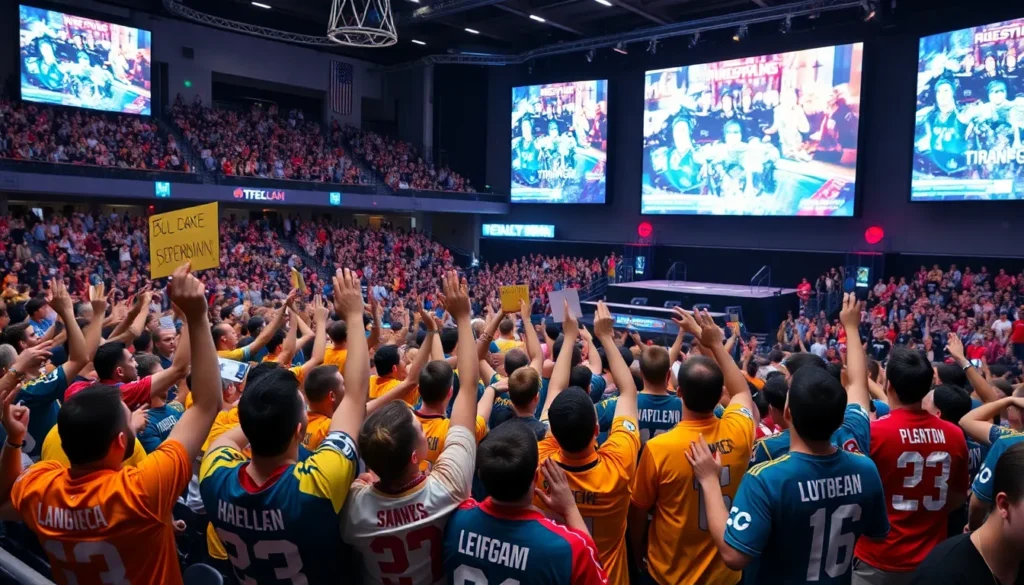
Esports tournaments continue to evolve, revealing significant trends that shape player engagement and audience interest.
Player Participation Rates
Player participation rates show impressive growth in esports tournaments. Data from 2023 indicates that participation rates have doubled since 2020. Many competitive titles, such as Valorant and Fortnite, attract thousands of participants across various skill levels. This surge in players reflects a desire for competitive gaming. Tiered entry options allow both amateurs and professionals to battle for recognition. Organizers frequently host regional qualifiers, further increasing access and engagement within the community.
Viewership Statistics
Viewership statistics underscore the rising popularity of esports tournaments. Current estimates suggest that over 500 million people watch esports globally, with over 250 million dedicated fans. Major events, like The International for Dota 2, attract millions of concurrent viewers. Platforms like Twitch and YouTube play crucial roles in broadcasting these tournaments. Increased accessibility fosters community interaction and engagement. Sponsorship revenues reach billions, reflecting the financial potential of the esports industry. The combination of high-stakes competitions and engaging content captivates diverse audiences.
Major Esports Tournaments
Major esports tournaments captivate audiences worldwide, showcasing top-tier competition and talent. Events feature a variety of games that elevate the gaming community, drawing in fans and participants alike.
Popular Titles and Games
League of Legends remains a fan favorite, boasting millions of players and viewers. Dota 2 and Counter-Strike: Global Offensive also rank among the most-played titles, each with dedicated followings. Games like Valorant and Fortnite capture attention with dynamic gameplay and vibrant communities. Popular events such as The International and the League of Legends World Championship highlight the intensity and excitement of these games. The rise of mobile esports, particularly with titles like PUBG Mobile, adds another layer to the competitive landscape.
Notable Tournament Organizers
Organizers like ESL and DreamHack lead the charge in the esports tournament scene. In addition, BLAST Premier and Riot Games play significant roles in providing high-quality events. Tournaments managed by FACEIT and MLG attract massive viewership, showcasing the best talent in structured formats. Organizations collaborate with sponsors to elevate the experience and improve engagement. They also leverage streaming platforms to enhance visibility and connect with fans, creating an ecosystem where competition thrives.
Challenges in Esports Tournaments
Esports tournaments face several significant challenges that can impact their execution and success. Understanding these obstacles helps improve future events.
Technical Issues
Technical issues can disrupt gameplay and diminish the viewer experience. Network latency often leads to frustrating gameplay scenarios, making it essential for organizers to invest in robust infrastructure. Additionally, unexpected hardware failures can occur, affecting both players and broadcast quality. Equipment compatibility also poses challenges, as various games may require specific setups. Lastly, successful events heavily rely on seamless live streaming; failure in this area can lead to substantial viewer dissatisfaction.
Scheduling Conflicts
Scheduling conflicts often arise due to multiple tournaments overlapping. Competing events can dilute player participation, forcing gamers to choose between lucrative opportunities. Timing for major titles also necessitates careful planning to avoid clashing with other high-profile competitions. Popular games like League of Legends and Dota 2 have established seasons, constraining tournament organizers. Moreover, aligning tournament dates with regional and international gaming calendars increases complexity. Organizers must also consider player travel schedules, as lengthy journeys can hinder performance.
Future of Esports Tournaments
Growth in esports tournaments seems unstoppable, with trends revealing significant shifts in both formats and audience engagement. Tournaments are likely to embrace hybrid models that combine in-person events with virtual participation, allowing broader access and higher engagement rates. The emergence of new technologies such as augmented reality could revolutionize the viewer experience, making events more interactive and immersive.
Increased sponsorship deals demonstrate the financial viability of esports, with billions in potential revenues fueling expansion. Projections indicate that global viewership might exceed 600 million in the next few years, further solidifying esports as mainstream entertainment. Viewers increasingly favor platforms that offer real-time interaction, spurring organizers to enhance stream quality and commentary.
Prize pools continue to grow, emphasizing competition for both established teams and newcomers. Teams often are expected to adopt data analytics to optimize player performance and training methods. As participation rates soar—over 300% growth among amateur players since 2020—tournaments now cater to a wider range of skill levels, encouraging inclusivity.
Emerging titles and mobile games are likely to capture attention, with events focusing on popular franchises demonstrated through tournaments. Continued collaboration among developers, sponsors, and streaming platforms promises to enhance the overall experience. Challenges such as technical disruptions and scheduling conflicts remain critical issues to address, ensuring seamless operations during events.
Preparation becomes essential for organizers who face these obstacles, as they aim to create unforgettable experiences for fans and players alike. Sustainability of venues and environmental considerations may increasingly feature in planning discussions. The next era of esports tournaments will hinge on innovation and adaptability, ensuring thrilling experiences for audiences worldwide.
Esports tournaments are set to redefine competitive gaming as they continue to grow in popularity and complexity. With an ever-expanding audience and increasing participation rates, the landscape of esports is evolving rapidly. The blend of thrilling competition and community engagement creates an unparalleled experience for fans and players alike.
As organizers embrace innovative technologies and hybrid participation models, the future looks bright for esports. Addressing challenges like technical disruptions and scheduling conflicts will be crucial in maintaining the excitement and integrity of these events. The commitment to creating memorable experiences ensures that esports tournaments will remain a captivating force in the entertainment industry for years to come.